Guides
Room-planning notes and technical explainers for projection systems in real spaces.
Read the guides
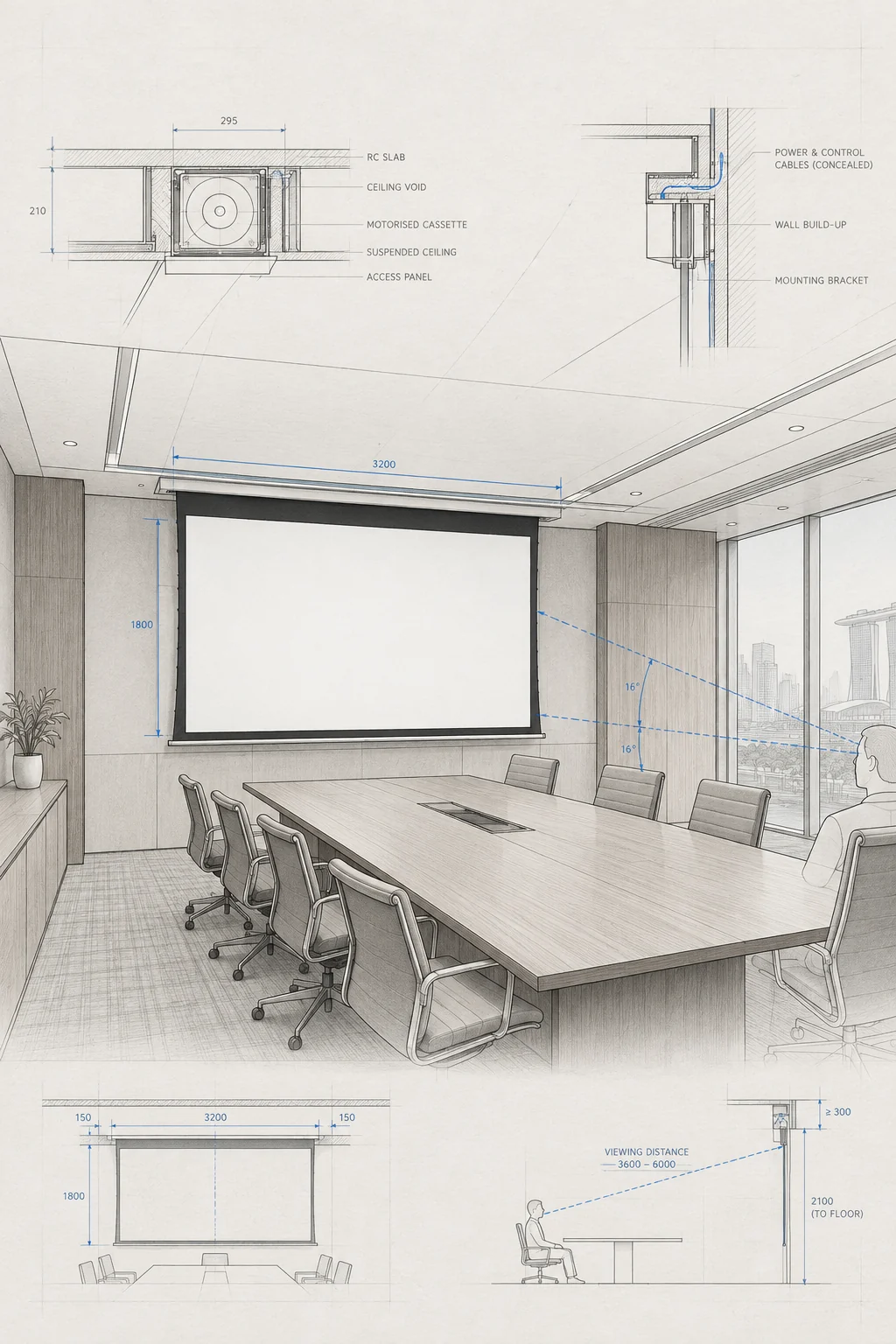
How projection screen sizes are measured
Specify the visible image width, height and aspect ratio instead of relying on a diagonal number alone.
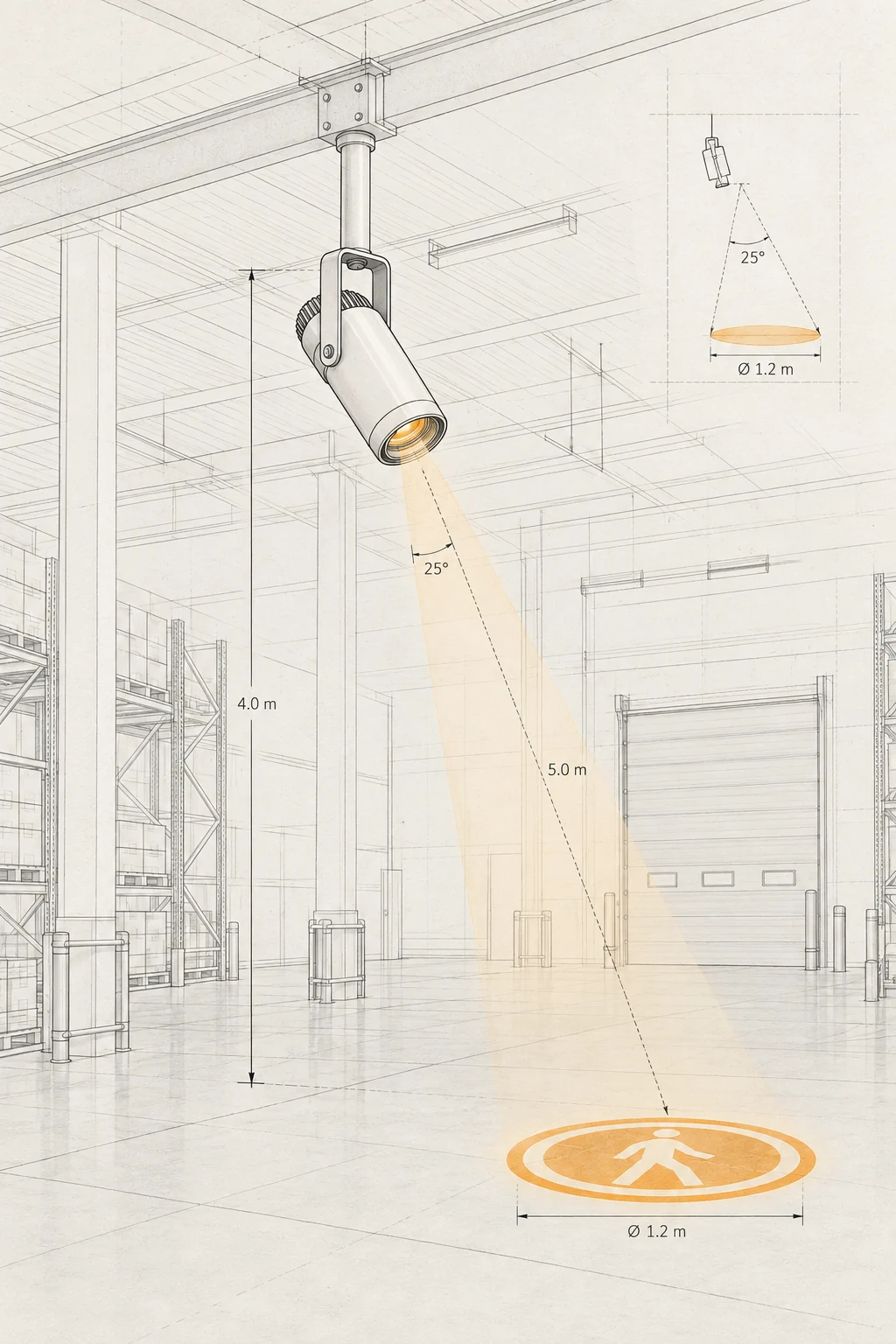
Read guideLogo and safety projection applications
Plan branding, wayfinding and visible operational cues with a logo or gobo projector without treating projection as a substitute for safety controls.
Read guideLogo projectors: a buyer guide
Scope a logo or gobo projector around the artwork, surface, image size, throw, light and operating environment.
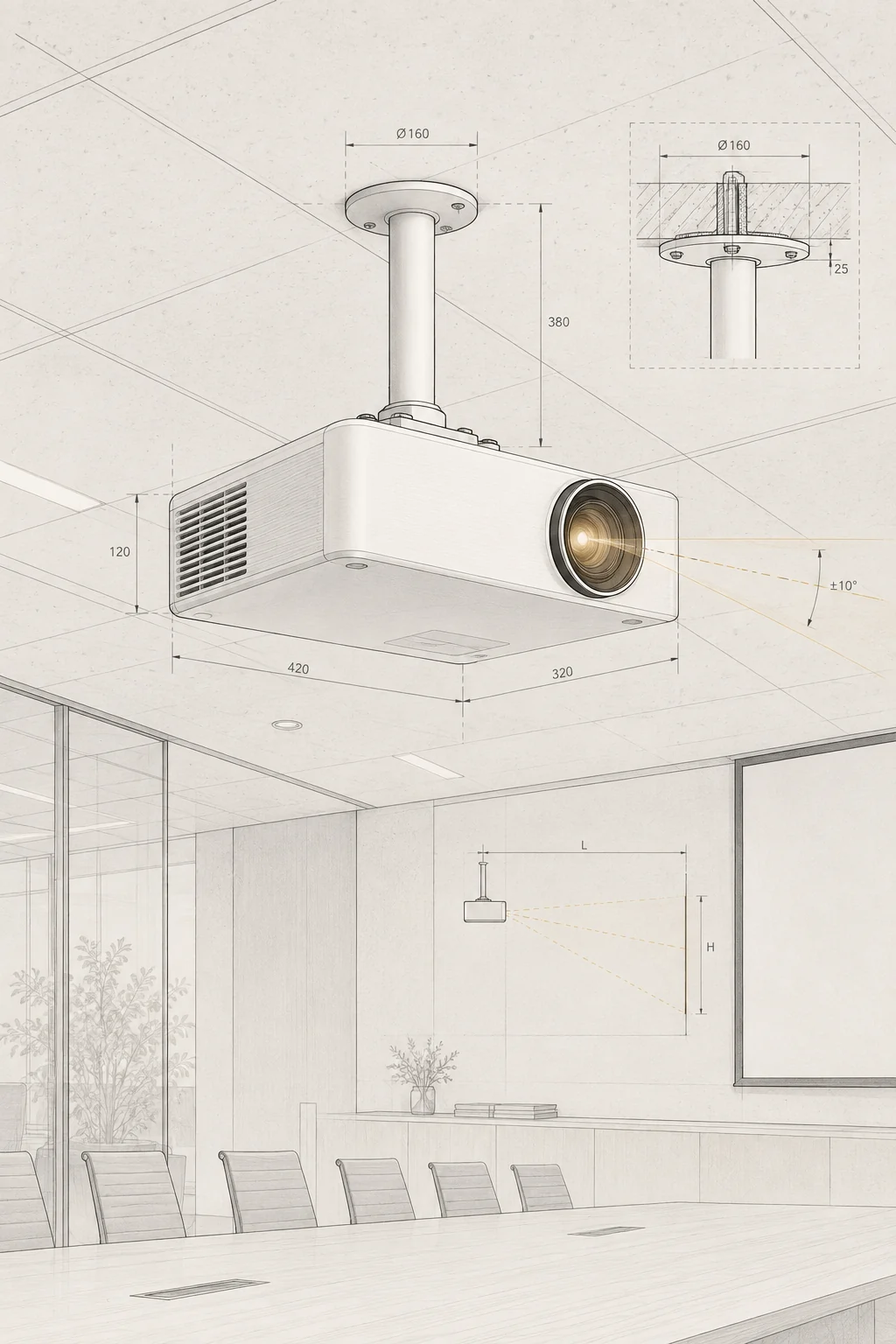
Read guideProjector placement and alignment
Place a projector around the lens, screen plane and room geometry before reaching for digital correction.
Read guideProjector screen gain explained
Understand how screen gain changes reflected light, viewing angle and image uniformity before choosing a screen material.
Read guideProjector specifications glossary
Read projector specifications in plain English, then connect the numbers to image size, room light, source content and lens geometry.
Read guideWhat screen aspect ratio means
Choose the screen shape from the source content, image width, room geometry and the people who need to see it.
Read guide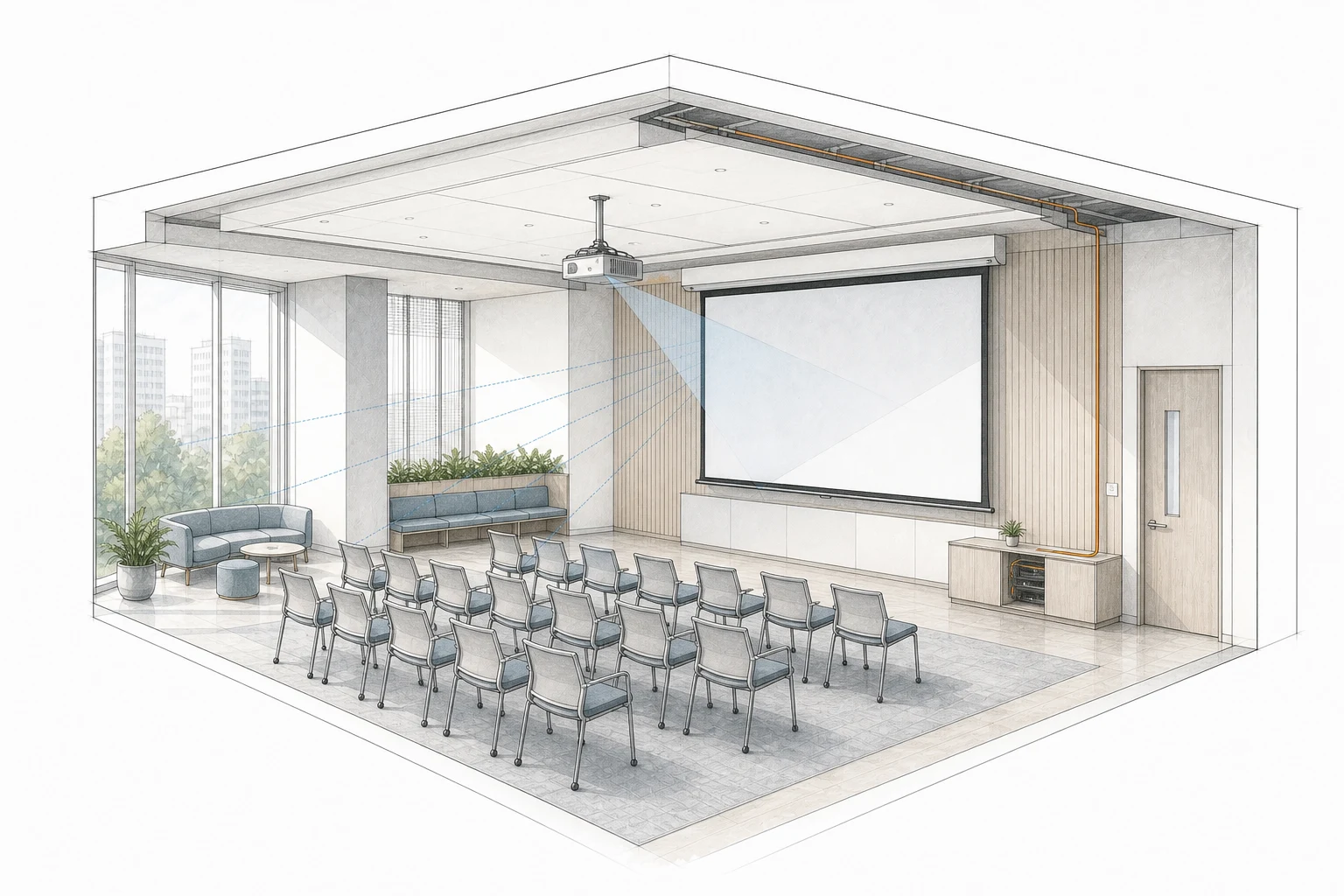
Choosing the right projection screen for your room
A practical way to compare screen types, room constraints, image shape and projector fit before specifying a projection screen in Singapore.
Read guide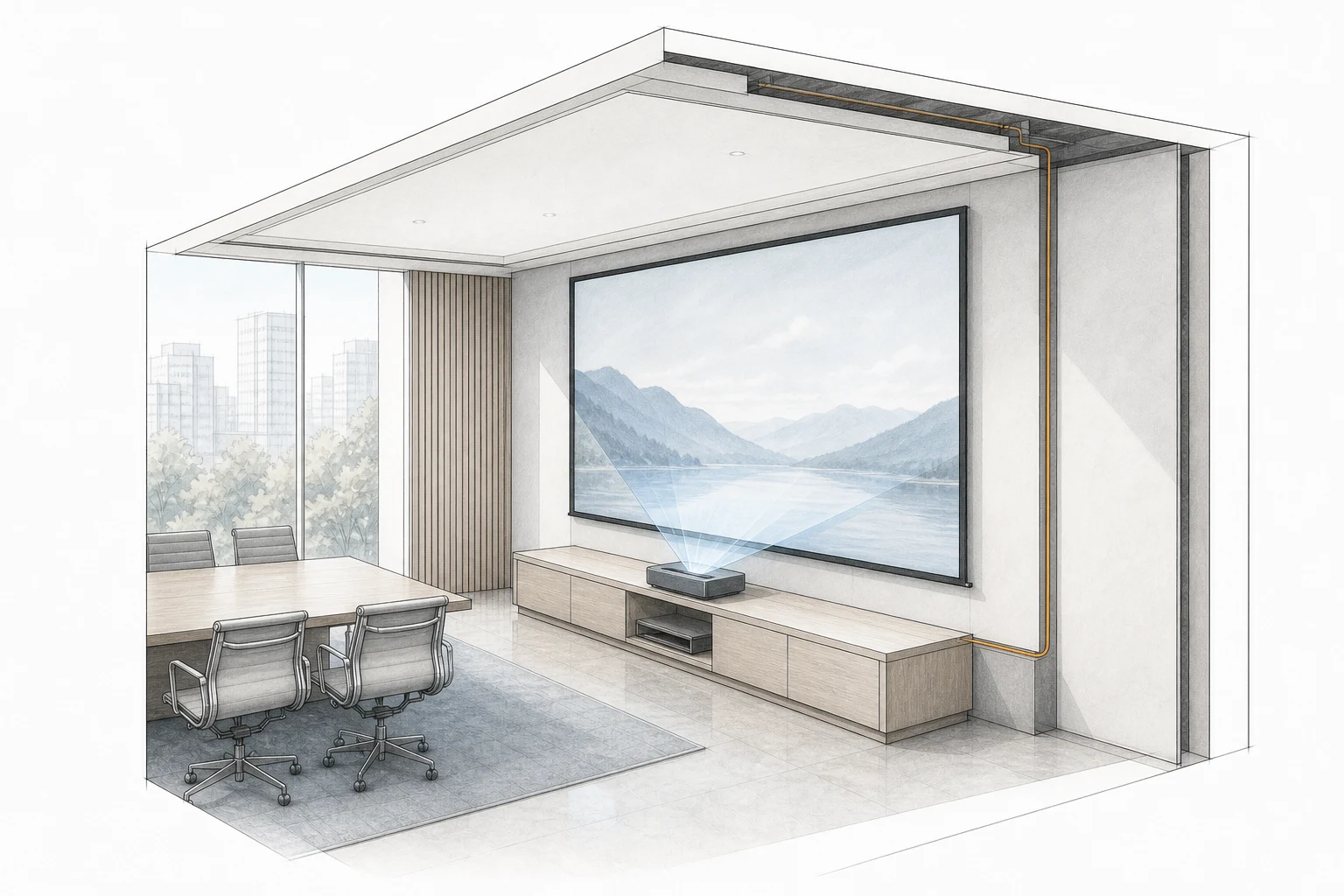
Is an ultra-short-throw projector right for your room?
A checklist for deciding whether a UST projector fits your wall, console, screen surface, light conditions and alignment tolerance.
Read guide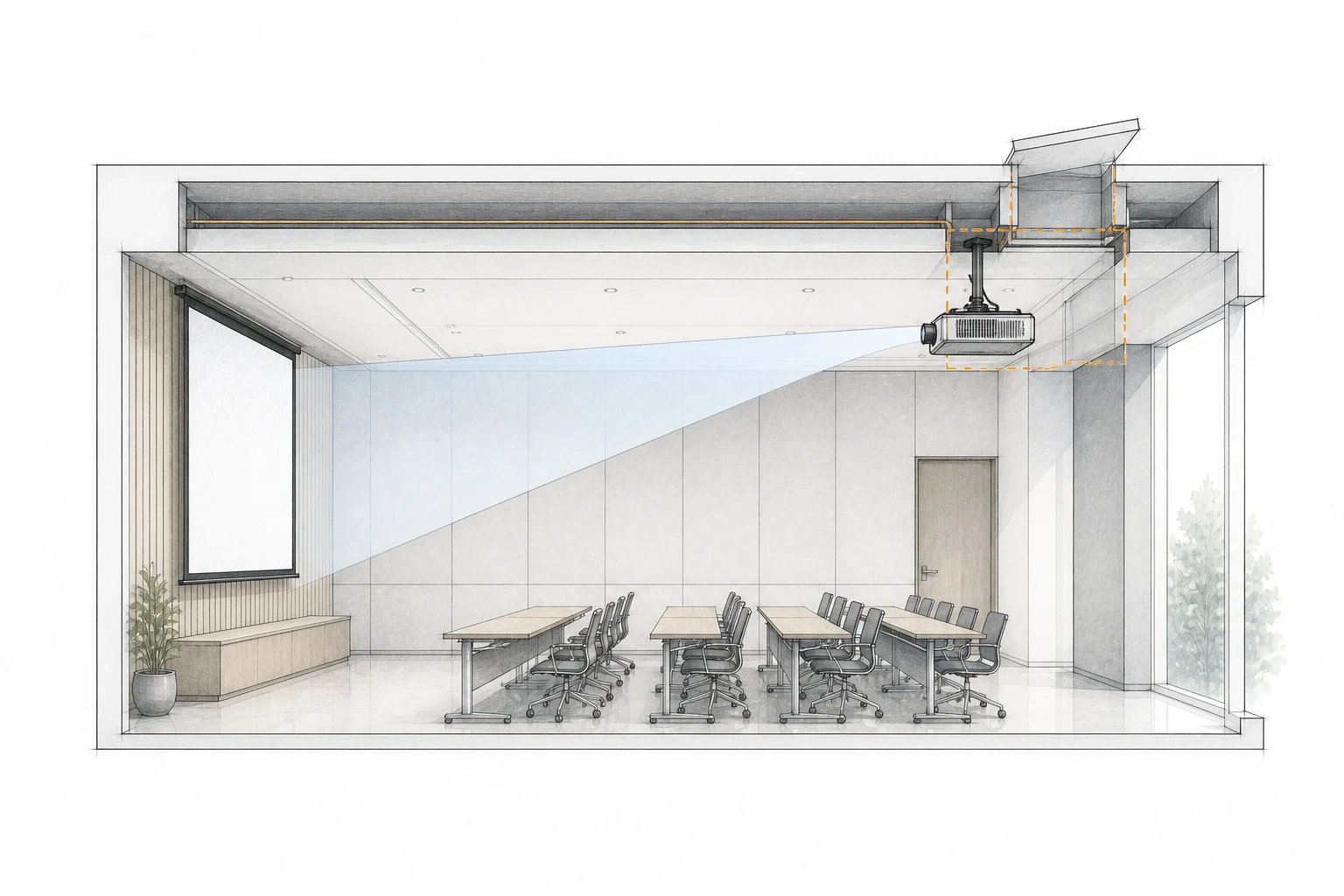
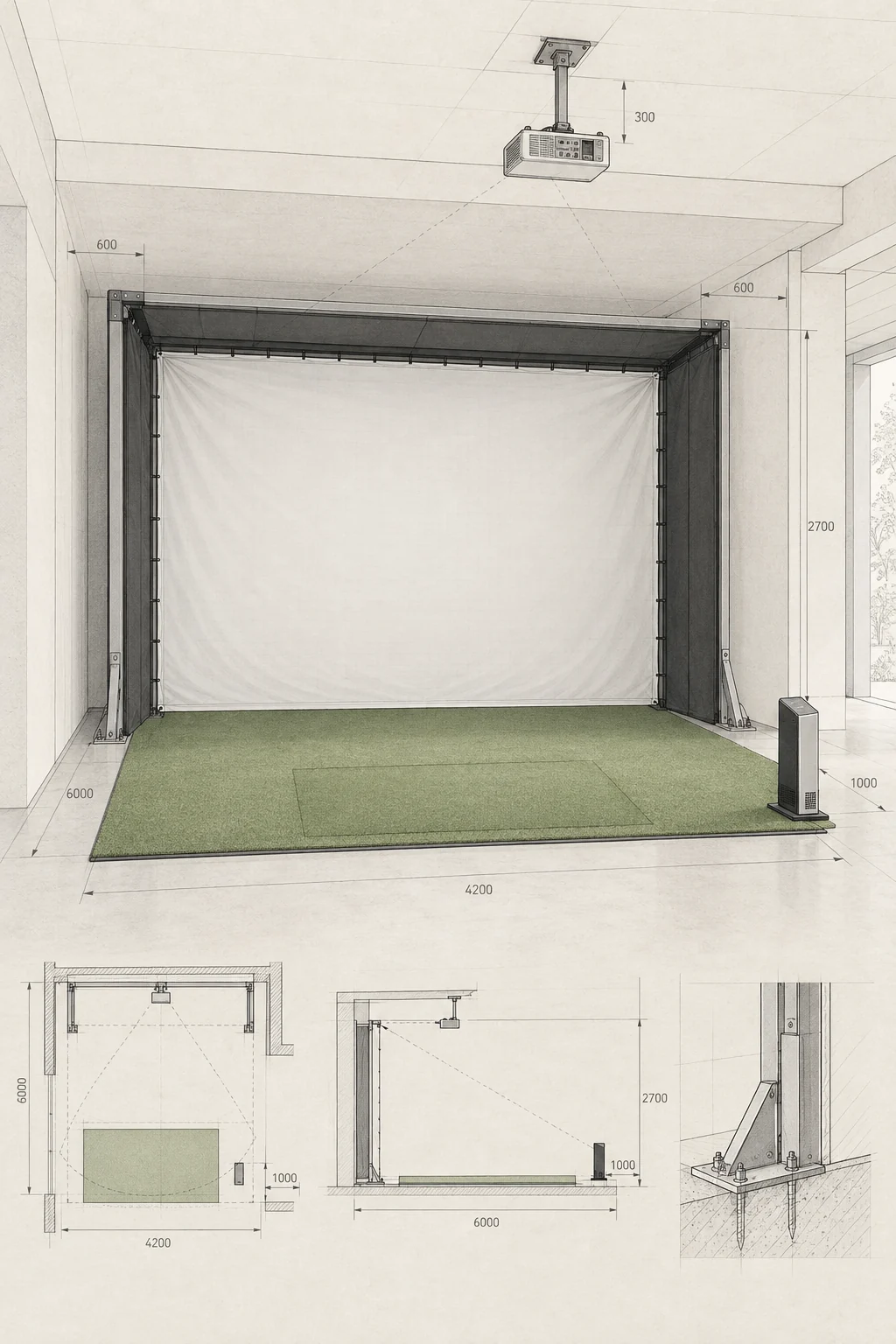
Projector throw distance guide and planning tool
Use image width and a projector's throw-ratio range to estimate a planning distance, then verify the actual model, lens and room.
Read guide